|
|
|
|
|
IASD Lifetime Achievement Award Winners Discuss Their Work With DreamsAsked to speak of their careers in dream work, and their attempts to further the study of dreams, IASD1 Lifetime Achievement Award winners shared the following words with us. For a more complete look at the work of each of these individuals, use the Member Page link at the end of each section. Also included are the introductions by Rita Dwyer and Marcia Emery for 2012 Lifetime Achievement Awards to three founding members. |
|
|
|
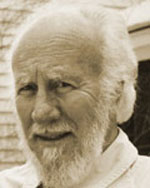
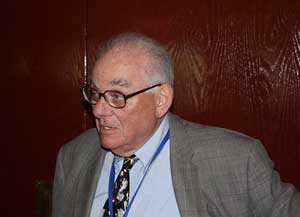
Robert Van de Castle, PhD Personal Profile Among my most tangible contributions to the field of dreams and dreaming , I would consider my publications to be my primary achievements. The Content Analysis of Dreams, co-authored with Calvin Hall (Appleton - Century - Crofts, 1966) became a standard reference book and a "how-to-do-it" manual for investigators wishing to examine dream content in a quantitative fashion that could be statistically evaluated. This system has been utilized in hundreds of subsequent studies, despite an assessment by an early review from a University of Chicago dream researcher that, "It seems most unlikely that the Hall-Van de Castle system would be adopted carte blanche by anyone." [Contemporary Psychology, 1967, p 607] Robert Van de Castle's IASD Member Page Back to Lifetime Achievement Main Page
|
|
A survey chapter entitled "The Psychology of Dreaming" appeared in a loose-leaf compiled text book published by General Learning Press in 1971. A greatly expanded version, over 500 pages in length, entitled Our Dreaming Mind (Ballantine Books, 1994) became a widely used textbook for classroom teaching. It covered a vast range of dream topics including the history of dreams and a review of dream theories and research findings . This book was described as a "landmark" by Monte Ullman, a "masterpiece" by Henry Reed, a "superb compilation" by Jayne Gackenbach, and a "sweeping compilation unsurpassed in the literature for its scope" by Stan Krippner. It was so popular a book that it became an Alternate for the Book of the Month Club and the choice of the month for the Quality Paperback Book Club. Having the authorship of this book recognized on my epitaph is something I have seriously considered, and I am currently planning on updating this book with a different publisher.
I have offered talks and workshops on dreams in Belgium, Canada, Latvia, Mexico
and Russia, and attended and presented papers at most of the IASD conferences
throughout the years including those in Holland and Denmark.
In a different context, Henry Reed and I also pioneered our Dream Helper Ceremony in which a group of dreamers attempt to assist a designated "target person" with an undisclosed emotional problem through their combined telepathic dreaming efforts. Over many years, the "target persons" have quite consistently expressed extremely favorable reactions to this procedure and stated that the dreamers had correctly identified significant personal information that had not been overtly disclosed to any of the ''dream helpers."
I consider that I have made a contribution to the area of paranormal dreaming by continually emphasizing in many venues that a substantive data base has accumulated to confirm the existence of paranormal dreaming. I have been fortunate to have personally had the opportunity to participate as a dreaming subject in four sleep laboratory studies investigating the possible evidence for psi dreaming. The first experience was at the Institute of Dream Research in Miami Florida directed by Calvin Hall. I was also extensively studied at Mamonides Hospital in Brooklyn, New York by Stanley Krippner and Montague Ullman. I also served as a subject in my own sleep laboratory at the University of Virginia Medical Center. The results I achieved under these carefully controlled laboratory conditions, and during some nights at the University of Wyoming where David Foulkes was the investigator, were so personally impressive to me, that I felt I was scientifically obligated to attempt to publicize them as widely as I could, establishing a new paradigm for evaluating the parameters of the dreaming experience.
|
|
|
|
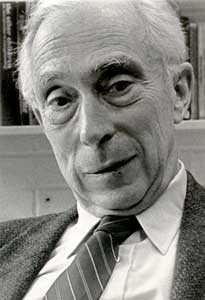
Montague Ullman, MD In 2008, Montague Ullman (Monte) died before he was able to complete his personal reflections for this page. For a tribute to this giant among dreamers, go to: Back to Lifetime Achievement Main Page
|
|
|
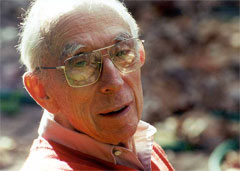
Stanley Krippner, PhD Stanley Krippner took an interest in dreams at an early age, and still has a collection of dream reports from his high school days. Stanley Krippner is a professor of psychology at Saybrook Graduate School in San Fransisco. |
|
|
Ernest Hartmann, MD Ernest Hartmann, MD, is Professor of Psychiatry at the Tufts University School of Medicine, Director of the Sleep Disorders Center at Newton Wellesley Hospital, and author of nine books and about 325 articles in professional journals. His most recent book (written for nonprofessionals as well as professionals) is Dreams and Nightmares: The New Theory (1998, Plenum, Paperback revised, 2002, Persus NY). In brief, the theory is that dream imagery pictures the emotion of the dreamer, and the intensity of the central imagery is a measure of the power of the underlying emotion. The theory is based on a great deal of research, especially on dreams after trauma. A systematic study of dreams before and after 9/11/01 has recently been completed which supports the theory. |
|
|
|
|
|
Milton Kramer, MD
I have had the opportunity to spend 48 years of my academic career involved in dream research. I came out of the Army in 1960 and joined the NIMH-funded dream research group at the University of Cincinnati, where I had had my psychiatric residency. The group was lead by Roy Whitman and was utilizing EEG techniques to identify REM sleep and recover dreams. In 1962, I published my first dream paper, “Which Dream Does the Patient Tell?" It was in this context that I had my grounding in dream research with Whitman, Bill Baldridge and Paul Ornstein. |
|
I was pleased that those of us interested in the disciplinary base for dream researchers had a national organization in ASD. Then happily SUNY Press started a dream book series and asked Bob Van de Castle to be its editor. What was needed was a journal to complete the necessary triad and that came to fruition with the start of Dreaming with Ernie Hartman as its first editor. An academic career was possible with dreams as one’s topic area. The future for me in dream research remains uncertain as does so much when you are 79. But the promise is in the work and in my colleagues. Back to Lifetime Achievement Main Page
|
|
|
|
Gayle Delaney, PhD 2012 IASD Lifetime Achievement Award Winner Personal Profile
Back to Lifetime Achievement Main Page
|
|
2012 Lifetime Achievement Award Introduction to three of the founders of IASD.
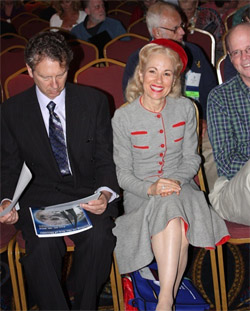
[edited] Within IASD, through the years, Gayle has presented at IASD conferences, written IASD our publications, been visible and vocal proponents of IASD and its goals. More importantly she has changed the understanding of dreams and dreamwork in the world community. Gayle graduated from Princeton University and received a doctorate in clinical psychology from Union Graduate School. She also studied at the CG Jung Institute in Switzerland and is fluent in English, French and Italian, and teaches dreamwork here in the US and abroad. In the early 1980s, Gayle joined Dr. Loma Flowers in opening the Delaney & Flowers Dream Center in San Francisco. Her Dream Interview Method of Interpretation became a classic. Who doesn’t remember, “I’m from Mars. What is a sword? Describe it for me…” Sometimes a cigar is just a cigar, but now describe a sword in words that an alien would understand. We ourselves are often the aliens in our dream worlds. Gayle has authored seven books including the best-seller Living Your Dreams, which sparked modern interest in dream incubation in 1980. It was a practical book and guide to help dreamers learn how to discover their dreams meanings and messages. Other books are: All About Dreams; In Your Dreams: Falling, Flying, and Other Dream Themes; (notice that all three honorees have focused on themes), Sensual Dreaming: How to Understand Erotic Content in Your Dreams; and Breakthrough Dreaming: How to Tap the Power of Your 24-Hour Mind, and The Dream Kit. Gayle has appeared on hundreds of popular shows and productions, is an expert figure skater, and a charismatic woman who serves as a rich resource for a sleeping public awakening them to the value of their dreams.
|
|
|
|
Patricia Garfield, PhD 2012 IASD Lifetime Achievement Award Winner Personal Profile
|
|
2012 Lifetime Achievement Award Introduction to three of the founders of IASD.
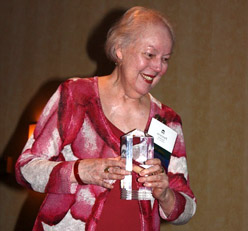
[edited] Within IASD, through the years, Patricia has presented at IASD conferences, written IASD our publications, been visible and vocal proponents of IASD and its goals. More importantly she has changed the understanding of dreams and dreamwork in the world community. At her mother's suggestion, Patricia began recording her dreams as a young girl, and now has a personal collection of literally thousands of dreams. Is it any wonder that this early interest in dreams would lead her to earn her a PhD in Clinical Psychology from Temple University in Philadelphia. She taught psychology at several universities on the East and West Coasts, and is still teaching today, a course called Lifelong Dreaming to seniors at the Dominican University in San Rafael, CA. Patricia is also a best-selling author of Twelve books, of which her first, Creative Dreaming, published in 1974, is still so popular that it has been translated into 14 languages. Some of her other books are The Healing Power of Dreams; The Universal Dream Key: The 12 Most Common Dream Themes Around the World; The Dream Messenger: How Dreams of the Departed Bring Healing Gifts; Women's Bodies, Women's Dreams; Your Children's Dreams, and The Dream Book, A Young Person’s Guide to Understand Dreams. This book received the 2002 Children's Media Award sponsored by Parents’ Guide to Children Media. A companion for that book, called Dream Catcher; A Young Person’s Journal for Exploring Dreams provides a guide for children 8-10 years old. Patricia is a frequent guest on many major national and international radio, TV, and online venues. She is also an artist and a poet, ever graceful and elegant, and is ever gracious and willing to share her dream wisdom.
|
|
 |
Jeremy Taylor, Dmin 2012 IASD Lifetime Achievement Award Winner Personal Profile
|
|
2012 Lifetime Achievement Award Introduction to three of the founders of IASD.
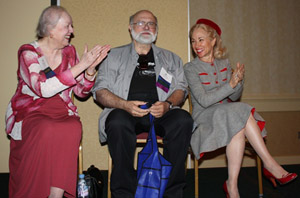
[edited] Within IASD, through the years, Jeremy has presented at IASD conferences, written IASD our publications, been visible and vocal proponents of IASD and its goals. More importantly he has changed the understanding of dreams and dreamwork in the world community. Jeremy Taylor is an ordained Unitarian Universalist Minister with a Doctor of Ministry degree (D.Min.) from the University of Creation Spirituality and an honorary Doctor of Sacred Theology (STD) from Starr King School for the Ministry. He has taught at schools and seminaries of the Graduate Theological Union in Berkeley for over 30 years, but he also teaches at other colleges and universities not only in CA, such as the Haden Institute in NC, but some as far away as South Korea. In recent years he has enlightened dreamworkers in Canada, Mexico, Australia, England and Peru. Jeremy was an early proponent of projective dreamwork, the “If it were my dream” approach, or as Jeremy might say, “In my imagined version of the dream…” He is the author of four books, DreamWork being the one that in 1983 provided me with a template for founding a dream group, The Metro DC Dream Community. His latest book is an updated version of that, titled The Wisdom of Your Dreams: Using Dreams to Tap into Your Unconscious and Transform Your Life. Other earlier books are The Living Labyrinth: Universal Themes in Myths, Dreams and The Symbolism of Waking Life; Where People Fly and Water Runs Uphill. Jeremy spreads the good news about dreams throughout the media and is a frequent guest on TV and radio, as well as online, such as hosting AOL’s innovative dream work show. As a powerful advocate for social justice, Jeremy also has inspired others with his lifetime practice of boldly putting his ideas out front, using dreams as a tool not only for personal understanding and growth, but also for outreach to those who are marginalized in our society. Jeremy is also a media favorite, a published poet, a prize-winning screen-play writer, artist and cartoonist.
|
|
| 1. IASD used to be ASD, the Association for the Study of Dreams. In June 2004 "International" was officially added to the name. | |
 |