
Index of Films and Documentaries
Reviews by Deirdre Barrett, PhD
5000 Fingers Of Dr. T. (1953)
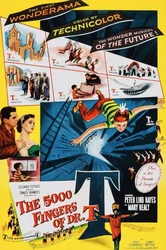
This is Dr. Seuss’ first live-action movie–filmed with actors rather than animation, but his trademark combination of whimsy and dark themes is easily recognizable. The widowed mother of Bartholomew is determined her son must learn to play the piano. She engages Mr. Terwilliker to supervise endless practice. The waking-life Terwilliker is only mundanely authoritarian and insensitive, but Bartholomew goes to sleep and a dream encompasses most of the duration of the film. The dream Dr. T. is a tyrant with allusions to the Nazis (the film was made right after WWII) but also more generally embodying the terrifying power an unjust adult may easily hold over a child. Sets enhance the effect with impossibly high Bauhaus buildings which Bartholomew must scale on a flimsy ladder to escape music prison. Seuss commented on his use of dreaming in a memo to the film’s producer, Stanley Kramer. “The kid, psychologically, is in a box. The dream mechanism takes these elements that are thwarting him and blows them up to gigantic proportions.” It’s an interesting film and may appeal to older children; young ones could be frightened by much of the content. 89 minutes. Rated G.
Peter Lind Hayes; Mary Healy (Stars). Roy Rowland (Director). (1996). The 5,000 Fingers of Dr. T. Columbia/Tristar Studios.
The Age of Man (1990)
Zeke Mazur and D Stolzenberg based this film on two dreams Mazur had after reading surrealist Michel Leiris’ autobiography of same title. Mazur narrates in a parody of the serious tone which crime dramas use to assure viewers they are being scrupulously precise—except in this case, all the exact details are of fantastic events. In the first dream, Mazur finds illustrated books by Leiris and Jean Cocteau. A series of images and pseudofacts from these follow until one still “from the rare color films of Cocteau” becomes a moving film of an erotic horror scenario in a jungle. Upon the end of this dream, the film cuts briefly to a documentary of a water processing plant—waking life facts echoing themes in the dream. The second dream links to imagery in the first: the jungle scene has a three headed monster abusing a girl’s navel, the second features a young woman with three navels. The filmmaking is obviously low budget but excellent at capturing the feel of dream imagery. The black and white footage and heavy use of stills are reminiscent of photography of the surrealist period so conjure up the early films of Cocteau or what one imagines Leiris might have produced if he’d illustrated his dream accounts. The mock documentary style is amusingly campy but also makes a point about the subjective reality of dream experience. The film is not commercially available but has occasional showings including at the IASD conference 2006.
Arizona Dream (1994)
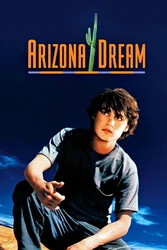
Excellent! This is the first English language film by Bosnian director Emir Kustrica (his only other film widely available on video is Time of The Gypsies–also excellent but less directly related to dreams). Johnny Depp is a gamekeeper who counts fish in the NYC harbor until the marriage of his uncle Jerry Lewis to model Paulina draws him back to Arizona, the land of his childhood, and to his uncle’s romantic if not mystic version of a Cadillac dealership. At first there are distinct dream sequences in which an Eskimo catches an odd fish with both eyes on the same side of its body, people walk down roads behind door frames, and our hero wakes to realistic scenes in which other people recount their dreams. The eccentric Faye Dunaway shows up to buy a Cadillac. Depp falls in love and begins to help her build the flying machines she dreams of. Gradually the waking/dreaming boundary blurs, Depp begins to recognize animals and other objects from dreams, the improbable flying machines begin to function, and elements from everyone’s dreams merge into one consensual surreal reality. I think it has some of the best dream sequences ever filmed. It relies on surrealistic images and odd transitions to convey a compellingly dreamlike tone without any of the special effect of blurring focus or colored lighting used so stereotypically in other films. English language film shot in France. 115 minute version widely available on video; 140 minute director’s cut version shows at art houses and campus film series. Rated R.
Johnny Depp; Jerry Lewis (Stars). Emir Kusturica (Director). (1996). Arizona. Warner Studios.
Beyond Dreams Door (1989)
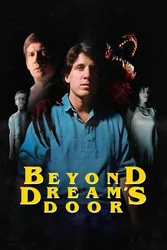
Directed by Jay Woelfel, this low budget horror film has a more inventive script than average and a nice sense of dream imagery, but it’s marred by poor acting. A college student, who has not recalled any dreams since the death of his parents years ago, begins to have terrifying chains of false awakenings. He turns to his psychology teacher for advice. At first the professor offers a plausible discussion of how the nightmares might relate to the parents’ death but soon more supernatural explanations intervene. While real-life dream-sharing often diffuses the terrifying nightmares, “Beyond . . .” plays compellingly with the common fear that to tell them will bring them to life or infect listeners. The simpler nightmare imagery is quite striking–a face speaking out of the ground, a friend’s mother chatting pleasantly while wiping copious blood off her hands. The main demon, however, consists of a laughably cheap costume which Woelfel struggles to shoot mostly in shadow. Overall, the film disappoints, but it has its moments.
Brainstorm (1983)
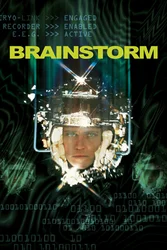
A husband and wife team invents a device that can record one person’s dreams or fantasies and feed them into another person’s brain to experience; the government wants to exploit this for military purposes. Features some good special effects–dream scenes. Probably for sci-fi buffs mostly; not a film that transcends the genre. Stars Natalie Wood in her last role, along with Christopher Walken. 106 minutes. Rated PG.
Christopher Walken; Natalie Wood (Stars). Douglas Trumbull (Director). (2000). Brainstorm. Warner Studios.
Blood Tea and Red String (2006)
Christiane Cesgavske’s one-woman, stop-motion animated feature was 14 years in the making. Painstakingly hand-crafted stuffed animals and dolls move through simple fairy tale sets. Night skies feature pinhole stars; running water is created with lights on cellophane. “Blood Tea . . .” tells of a race of aristocratic velvet-frocked White Mice who commission the “Creatures Who Dwell Under the Oak”—rat-like animals with crow’s beaks–to construct a female doll. When the compelling porcelain figure is finished, the Creatures fall in love with her and refuse to release her to the equally enamored mice for any amount of gold. The Creatures keep the doll as an obliquely erotic companion and eventually sew a giant egg under her garments. The mice sneak in by night in a carriage pulled by a tortoise and steal her. As they launch into a drunken orgy featuring the title blood tea, the Creatures seek to recover her with the help of a shamanic toad. A spider with an eerie porcelain face helps and hinders each group in turn. The doll-with-egg-in-belly gives birth to a human-faced bluebird. Mice, rats and spider compete for the doll and her exotic child with tragic consequences. “Each man kills the thing he loves” seems to be the message of the film. There are specific dream scenes—mostly around hypnotic plants that make travelers sleep—and the whole film has a dream or storybook feel. But it is the childhood nightmare or the fairy tales of the Brothers Grimm. Its magic serves sudden, violent death as often as love or beauty. It’s a tale with childhood’s imagery but not a tale for children. This quirky work is showing initially only at large city art-houses but will probably appear on video. 69 minutes. Unrated.
Animated. Christiane Cesgavske (Director). (2006). Blood Tea and Red String. Cinema Epoch.
The City Of Lost Children (1996)
Science fiction based around REM sleep. The villainous Cyclops, a disembodied brain in a vat connected only to one giant eye, looks after a family of defective clones. Each attempt to clone a complete human from the brain has resulted in a flaw in the dreaming process. Six of the clones have severe narcolepsy and are rendered incompetent by dropping into the dream state frequently and unpredictably. The most functional clone is the evil Krank. His defect is that he has no REM sleep and is therefore aging rapidly. His narcoleptic brothers rush to tell him their dreams, while the Cyclops kidnaps children to hook up to an EEG which is supposed to feed dreams into Krank, but instead repeatedly malfunctions giving them fatal nightmares. The heroes are a circus strongman whose little brother is kidnapped by the Cyclops and an army of children he leads to the rescue. The film stars children and is quite evocative of their perspective–the Santa Claus nightmare is a classic. However, this is not a film for children by today’s standards. It is right in the tradition of the original Grimm’s fairy tales, before they were cleaned up, of fantastically gruesome things out of children’s nightmares brought to life. Will adults like it? Maybe, if you appreciate lots of dream sequences and other dramatic imagery. The sets look like a much kinkier version of those of Bat Man and the tone is Peter Pan meets Night of the Living Dead. Directed by Marc Caro and Jean-Pierre Jeunet (the same pair who brought you that whimsical cannibalism comedy, Delicatessen). In French with subtitles. 112 minutes. Rated R.
Ron Perlman; Daniel Emilfork (Stars). Jean-Pierre Jeunet; Marc Caro (Directors). (1999). The City of Lost Children. Columbia/Tristar Studios.
The Clockmaker’s Dream (1904)
The Clockmaker’s Dream (1904), The Astronomer’s Dream (1899), and Dream of the Enchanted Forest (1900) by special effects pioneer Georges Méliès are three of the best of a vast number of shorts made at the turn of the last century using dreams to showcase multiple exposures, fades, and dissolves. In the former, the protagonist falls asleep and three women appear and teach him how to make different fantastic clocks. In the second, an astronomer dozes in his observatory and the moon eats his telescope. He tries to retaliate and eventually the moon eats him, too, chewing him up into little pieces and spitting him out to reassemble for more adventures. In the third, a sultan dreams of an imp who he chastises until he turns into Mephistopheles (a popular character in many of these films). Similar shorts by other directors use the formula of dreams of various professions. In Artist’s Dream (1898), the title character awakens to find the beautiful woman he’s embracing turning into his landlady demanding the rent. In the identically titled Artist’s Dream (1900), Mephistopheles brings pictures on the wall to life and the artist interacts with each in turn. In The Cavalier’s Dream, Mephistopheles taunts the title character with sumptuous meals which disappear. Many of these shorts present dreams as straightforward wish fulfillment. In Let Me Dream Again (1900), a festively costumed man and woman drink, play, smoke, and cuddle. Suddenly they both awaken, homely and depressed in an obviously loveless bed together. The Legend of Rip Van Winkle (1905) is based loosely on the Washington Irving story. Rip Van Winkle falls asleep and meets a mountain spirit, who transforms himself into a huge snake, and then into three more spirits.
These shorts have been difficult to find for decades, but I’m writing about them now because their copyrights are expiring and they are appearing on YouTube.com and sites more specifically dedicated to film archival. All of them seem more interested in dreams as a plot device than in capturing the essence of the dream state, but some depict the incorporation of real sensory stimuli or the confusion upon awakening nicely. It’s worth watching a few just for their place in the history of dreams in film.
The Clocks Were Striking 13 (1993)
The set for The Dream Institute of Technology almost makes this short film worth seeing. At ground level, visitors are greeted by a marble statue of the god Hypnos and an elegant library full of leather-bound dream volumes. In the dingy basement below, a barracks style sleep lab contains rows of sleepers, their EEG leads hooked to every sleep researcher’s ultimate fantasy machine–a video monitor that displays the dreams in progress. The scientists are evil, the plot is stupid, and the acting is amateurish, but an avid dream enthusiast might get a chuckle out of the whole tableau. This film shows in short film festivals, not available on video. Starring Matt Malloy and directed by Virginia Robertson. 15 minutes. Not rated but content is PG range.
Dead Of Night (1946)
A classic British horror film centering around dreams, especially clairvoyant dreams. An architect is awakened and summoned to a house party where he has the feeling he has met everyone before in a recurring dream. Each of the guests proceeds to tell their most memorable dream. Eventually, in a turn of events I won’t describe as it would spoil the suspense, these dreams are woven ingeniously as the day residue for yet another dream. Special effects used for dreams were crude in this era, but some of the ideas are clever. There is an especially interesting analogy about the memory for a dream being like a flash of lightning in that it is intensely vivid but the duration is not long enough for everything to be clear. Be careful not to confuse it with either of two unrelated American films by the same name: a 1972 release about a Vietnam War casualty or a 1987 one about a woman disfigured by her abusive lover who uses voodoo to restore her looks. 102 minutes. Not rated.
Michael Redgrave; Sally Ann Howes; Basil Radford (Stars). Dan Curtis (Director). (1994). Dead of Night. Republic Studios.
Deadly Dreams (1988)
In this grade-B science fiction flick, Lloyd Bridges plays a scientist who has made the discovery that DNA can be changed inside a living person during dreaming. In his own dreams, he is beaten up for discovering this way of manipulating people. When he awakens, he finds the scars from the dream beating to be real. Nevertheless, he eagerly applies the discovery for an incoherent assortment of nefarious purposes. Numerous other films such as Dreamscape have played with this mad-scientist-uses-dreams-to-influence-reality plot better. Also starring Janet Leigh as the gratuitous love interest and directed by Alf Kjellin who has made better films. 73 minutes. Rated R.
Mitchell Anderson; Janet Leigh (Stars). Alf Kjellin (Director). (1988). Deadly Dreams. M.C.E.G./Virgin Visi.
Death Bed: The Bed that Eats (made 1977, released 2004)
(NOT the same film as Death Bed 2002)
The backstory is more interesting than the film itself. Screenwriter/Director George Barry dreamed the title villain. He woke up and wrote a script about a demon who fell in love with a mortal. The demon constructed an ornate canopied bed with which to woo her, but when he succeeded, their unnatural coupling killed the mortal. The heartbroken demon’s spirit retreated into the bed which her parents took along with her body back to the ancestral family estate. A century later, passersby happen upon the abandoned mansion and sleep on the canopied antique. The sentient demon-bed manipulates their dreams for a night or two and then gobbles them up. Unable to decide if this is a horror film or comedy, it also downs some Pepto Bismal one victim has left on the night-table. The dream of the woman in the main couple who eventually do battle with the bulimic-demon-bed achieves a nightmarish effect by substituting a giant Madagascar hissing cockroach for the standard US variety. Scenes of actors and objects sucked into the digestive fluids of the bed’s interior are effectively dreamlike for low budget effects. However, mostly the film consists of leaden acting and children’s Halloween props. After Barry completed the film, he circulated a rough cut to studios and got no takers. Twenty-five years later, while surfing the internet, he stumbled upon a cult following of his never-released film. It had been pirated in England, New Zealand and Australia and (with subtitling) Spain. The first authorized dvd was released in the US in 2004 by Cult Epics label. Fans of Plan 9 from Outer Space or Trolls II are the audience for Bed . . .
Donnie Darko (2001)
First-time director Richard Kelly tells the story of suburban teen Donnie whose already disturbed psyche takes a sicker twist when an airplane’s engine crashes into his (unoccupied) bedroom. Jake Gyllenhaal (October Sky, The Good Girl) plays Donnie. Real-life sibling Maggie Gyllenhaal (Secretary) is his annoyingly well-adjusted sister Elizabeth. The film opens with Donnie sleepwalking across a moonlit golf course and awakening there the next morning. Gyllenhaal artfully combines panicky confusion and attempts at adolescent nonchalance throughout his descent into madness. From the external perspective, Donnie is merely a sleepwalker, but gradually the film lets us experience his subjective reality presided over by Frank, a six-foot rabbit who summons him first in dreams, and later awake. Though Frank is obviously an actor in cheap rayon fake-fur, he’s terrifying beyond what most filmmakers achieve with state of the art make-up and special effects. This is no Harvey or Easter Bunny. Frank’s glassy insect eyes bulge and his skeletal snout leers from beneath soft, stuffed ears. Late in the film when Donnie asks, “Why do you wear that stupid bunny suit?” we’re so caught up in the film’s eerie perspective that Frank’s retort makes chilling sense. “Why do you wear that stupid man suit?” The terrifying intensity of Donnie’s dreams and visions is contrasted with the banality of life at home and school—artfully making his psychotic perspective more real than ordinary reality. Donnie doesn’t quite fit any real DSM category—REM behavior disorder combined with schizophrenia would come the closest. However, the film does capture a rich variety of the subjective aspects of psychosis—horror, alienation, manic amusement, and grandiosity at being let in on secrets of the universe by a giant rabbit. Darko was slated for release in the fall of 2001, but after 9/11, no theaters were willing to show dark comedies about airplane parts crashing into buildings. It went straight from film festivals to video. Now it’s establishing itself as a midnight cult film—the new millennium’s answer to Rocky Horror or Harold and Maude. 113 minutes. Rated R.
Jake Gyllenhaal (Star). Richard Kelly (Director). (2003). Donnie Darko. Twentieth Century Fox Home Video.
Dorme (2006)
French director Sylvia Binsfeld directed, wrote and co-starred in this beautiful short in which a little boy dreams of an adventure across the Milky Way, through moonlit seas, past wizards with sleep potions to his grandmother’s house and then back to bed. Binsfeld utilizes computer effects to get surreally vivid stars, lanterns, and fireflies against the night sky. Much of the imagery is stereotypic of childhood magic but some is authentically dreamlike. A toy boat the boy has put afloat in the water transforms into a real one with him sitting in it. Later his mother dives into the water by the boat and transforms first into a mermaid and then into a 5-foot goldfish. This played at many festivals and is available on DVD from Dream Weaver Films. 7 minutes.
“The Dream” (2008)
Korean with English subtitles. Jin awakes from a dream in which he caused a traffic accident to find that such an accident has actually taken place in the street outside. The at-fault driver has fled, but police suspect a woman named Ran. Ran’s alibi is that she was at home asleep through the time of the accident. We see more of Jin’s dreams, however, and watch Ran sleepwalk in correspondence to their content, eventually bringing the two characters together. The plot is implausible and the characters flat, but Korean director Kim Ki-duk brings a lively aesthetic sensibility to the cinematography. The artfulness of both general events and the dream scenes elevate it above what the equivalent American sci-fi flick would do with the theme.
Dream Lover (1986)
(Not to be confused with a 1994 film by the same name but unrelated to nocturnal dreaming.)
A young woman suffering from a post-traumatic recurring nightmare goes to a sleep lab where she learns to alter the content of the dream and to wake herself up when she wishes. Then it takes a sci-fi turn as mechanisms for breeching REM paralysis are introduced and terror spills over into the waking world. Although plot and especially dialogue are weak at times, the sleep physiology and dream control techniques are well done. Since all males in the dreams are potential rapists and the woman hardly enjoys her nightmares, the origin of the title remains elusive. It would fit Dreams Come True’s plot much better. Good film; not for children, but older ones may enjoy it. 104 minutes. Rated R.
Kristy McNichol; Ben Masters (Stars). Alan J. Pakula (Director). (1993). Dream Lover. Warner Home Video.
Dreamchild (1986)
Alice Hargrove, Lewis Carroll’s inspiration for “Alice in Wonderland,” reminisces about her childhood. The surreal sequences, often involving Wonderland characters, are actually presented as waking fantasies but are very dreamlike. 94 minutes. Rated PG.
Coral Browne (Star). Gavin Millar (Director). (1993). Dreamchild. MGM/UA Studios.
Dreamland Express (1995)
Britain’s David Anderson combines live action, xerography, model animation, laser xerography, cel animation, pixelation and photographic animation into a unique surrealistic form of dream depiction. This short has been showing at animation festivals and is available on video along with “Deadtime Stories for Big Folk” and “In the Time of Angels”—two of his other short animation features that also contain surreal dreamlike imagery, although they are not as explicitly about dreams.
Dreams (1990)
(Don’t confuse with Ingmar Bergman’s earlier film of the same name which is good, but unrelated to nocturnal dreaming.)
Director Akira Kurosawa dramatizes a series of dreams of his own on film. They range from childhood dreams featuring animals and fantasy characters to a general’s PTSD nightmare in which his killed-in-action platoon comes marching back to him, to an old man’s ruminations on mortality. They range in quality, but overall the film is very artistically done and a visual feast. 119 minutes. Rated PG.
Akira Terao; Mitsuko Baisho (Stars). Akira Kurosawa; Ishiro Honda (Directors). (2003). Dreams. Warner Home Video.
Dreams: Cinema of the Subconscious (2010)
This documentary, directed by Roko Belic (Genghis Blues), was produced specifically to accompany the DVD release of Inception. It has some characteristics of the “Making of . . .” features found on many DVDs but distinguishes itself by focusing on the role dreams play in the film and explores relevant psychological research. It utilizes interviews with a number of IASDers including Stephen LaBerge, Jayne Gackenbach, Allan Hobson, and myself. These are interspersed with scenes from the film, backstage looks at how dream effects were produced, and director Christopher Nolan and actor Joseph Gordon-Levitt discussing how their own dreams informed the film. There are also typical dreamers recounting dreams and dream art representations interspersed. “. . . Subconscious” doesn’t go much beyond what would be in a television special on dreaming by way of general information, but it explores lucid dreaming in more depth. Comes with the Blu-ray disc/DVD combo pack for Inception.
Blu Ray: Leonardo DiCaprio, Joseph Gordon-Levitt, and Ellen Page. 147 minutes, rated PG-13. Warner Brothers. (2010) Inception.
Dreams Come True (1984)
A young couple learn how to get “out-of-body” at night and enjoy astral love while their bodies sleep. Mediocre film. Dir: Max Kalmanocwicz. On video, but hard to find. Rated R.
Dreams That Money Can Buy (1947)
The first feature-length, avant-garde film produced in America arguably boasts the most impressive collection of artistic talent ever to collaborate on one project. Hans Richter is nominally listed as the coordinating director, but the film’s dream sequences were directed by six leading visual artists who also designed the sets for their own pieces. Paul Bowles wrote the dialogue and a young John Cage composed the score. The unifying plot device is that a struggling artist discovers he can look in someone’s eyes and cause them to sink into a deep sleep in which they will have a “big” dream. He leases an office; fills it with a couch, surrealistic art, and a bust of Morpheus; and goes into private practice. Clients come in one door from the waking world/waiting room; periodically they or he opens the other door which leads into a void, seemingly representing the unconscious or source of dream images where an overwhelming barrage of bizarre scenes, emotions, and interactions are all happening at once. The best dream sequence is the opening one by Max Ernst which appears to be based on the same dream as his painting, Girl Menaced by a Nightingale. The dream’s feel of perfectly ordinary objects being unbearably sinister is only partially achievable on canvas but is more powerfully reproduced in the moving, changing media of film. Without modern special effects, it is more impressive that Ernst used choreography, sleight of hand, and surrealistic sets to capture the dreamlike quality of content and transitions. There is a scene in which red velvet curtains behind a woman suddenly become her dress that feels exactly like the film-goer is dreaming. Ernst was obviously an astute observer of what qualities go into making an experience oneiric. The only other artist’s sequence which tries for a realistic recreation of a night-time dream is Richter’s in which a man stops himself from committing a murder but nevertheless finds a bloody knife in his hand. It generates more and more blood as he tries to clean it. When he grabs people imploring them to help, their limbs fall off where he touches them. One’s body opens up to reveal a Magritte-style bird cage as his mid-section. Richter masterfully captures the growing chaotic horror of a nightmare. None of the other five sequences achieves this level of dream-like representation. Most of them use the metaphor of a dream as artistic license to comment on things other than the nocturnal. Marcel Duchamp’s sequence is a gangster trying to incubate a precognitive dream about the outcome of a horse race. The protagonist instead has delicate, poetic visions trying to lead him away from his current lifestyle. He responds to these by shooting and wounding our dream-therapist for perceived malpractice. Alexander Calder’s sequence contains two short dreams. One is artistic photography of his famous mobiles in motion; the other is of his less familiar mechanized circus figures, ingeniously made of everyday objects. Man Ray’s dream is of a film audience compelled to act out everything which the central character in the film does. In Fernand Leger’s, we watch a mannequin manufactured, dressed, wigged and eventually married to a “graduate of Yale” narrated by a hilarious doggerel song poking fun at relationship norms of that time. This film is not available on video, but is certainly worth watching for as it plays revival houses and university series on surrealism. 16mm format. 80 minutes.
Dreamscape (1984)
When a doctor teaches a young psychic how to enter other people’s dreams in order to cure their nightmares, someone else wants to use this technique for evil purposes. The plot is silly and a much better version of it appeared in the 1981 novel Death By Dreaming which is not credited. However, stars Dennis Quaid and Max von Sydow do their best with the material and the dream sequences which occupy half the movie have powerful images and use special effects well to simulate the dream world. 99 minutes. Rated PG13.
Dennis Quaid; Max von Sydow (Stars). Joseph Ruben (Director). (2001). Dreamscape. Image Entertainment.
The Dreamstone (1990)
Originally shown as a children’s cartoon series on BBC television in 1969, Dreamstone was released in 1990 with all 13 episodes as a feature length film. The animated fantasy takes place on a planet visible only to those who believe in it. On the light side lies the Land of Dreams and on the dark side is the Land of Nightmares. The white magician Dreammaker possesses the Dreamstone which he uses to send good dreams to people each night. He is aided by the Wats, who fly on leaves and by his pet dogfish Albert—a creature he saw swimming through the air in a dream and liked so much he brought him back to the real world. In each episode, the giant monster Zordrak, Lord of Nightmares, plots a scheme to steal the Dreamstone so that he can turn everyone’s dreams into nightmares. He renders his henchmen invisible in one, he turns his throne into a flying machine in another, and finally he tries kidnapping Albert so he can’t interfere. The graphics are simple and bold and the theme song is performed by the London Philharmonic. Dream-logic is handled nicely. Young children should enjoy most of the content except that The Dreamstone is more violent than some cartoons. Minor characters are killed in most episodes; some especially unfortunate Wats are devoured by Frazznats, Zordrak-allies who resemble a cross between a Venus flytrap and a shark. Good Times Entertainment. 130 minutes.
The Edge of Dreaming (2009)
Director Amy Hardie was already in the planning stage for a documentary about death when she dreamed that her beloved horse was dying. The image was so vivid that she went to the pasture to check and found him dead. A few days later, she dreamed that her deceased ex-partner told her Hardie herself would die the following year. This film is an exploration of whether this dream was precognitive (an obvious spoiler was that Hardie was doing Q&As with the film’s tour), and it focuses on dreams even more than on death. We see Hardie’s psychoanalyst husband encouraging her to take the dream metaphorically. But she develops a lung ailment which pushes her further toward a literal interpretation.
In addition to her personal story, Hardie interviews medical and psychological experts. I’m very interested in problem solving dreams, so my favorite footage was stem cell biologist Irving Weissman opining that dreams show us ways to adapt to waking reality. He tells a story of how he dreamed of doing a dance he’d never done and awoke knowing the moves. Mark Solms also appears on camera explaining his own dream theory. Toward the end of “Edge . . .”, events speed up but grow vaguer. Hardie implies she consulted a number of alternative practitioners, but we only hear an account of a small portion of one shamanic ceremony. Hardie’s lung ailment improves but the film is vague about what it was and exactly how much she’s recovered. The ending feels like she’s eager to wrap up; many threads are dropped. Overall, however, it’s intelligent, interesting, and has much stronger visual aesthetics than many documentaries–well worth watching. Screened on PBS’s show ‘Point of View’ (POV) and toured theaters with Hardie in attendance. Available on dvd.
The Eternal Sunshine Of The Spotless Mind (2004)
By screenwriter Charlie Kaufman (Being John Malcovitch & Adaptation). In yet another of Kaufman’s fanciful scripts a company, “Lacuna Inc,” has invented a method for erasing all memories of a significant other after the unhappy end of a love affair. The process is an electrically stimulated replaying of memories through one night of sleep in which they are erased. Perhaps Francis Crick would like this concept; it’s certainly counter to recent research on dream content as reflecting information being consolidated into memory. However, the film is not interested in being realistic about the technical details. With Kaufman’s usual goofy, surreal approach to illuminating serious issues, “Sunshine” explores the process of falling in love—and out of it. Its dreams are artful in the way the memories of the ex-lover, current reflections on them, remote childhood experiences, and external room sounds blend into surreal narrative. The film stars Jim Carey and Kate Winslett—the latter especially good in her portrayal of a histrionic, mildly borderline personality and all the charm and pathos that goes with that style of living. Recommend highly. 108 minutes. Rated R.
Jim Carrey; Kate Winslet (Stars). Michael Gondry (Director). (2004). The Eternal Sunshine of the Spotless Mind.
Final Fantasy – The Spirits Within (2001)
In this computer-animated film, alien “phantoms” have overrun earth. Biologist/heroine Dr. Aki Ross believes her nightmares may enable her to save the planet if only she can interpret them. The dreams feature appropriately oneiric imagery and abrupt scene shifts. The opening one with an extraterrestrial insect dragging Aki through a not-quite-liquid, not-quite-air environment is especially artful. Ironically, the main barrier to the dream scenes feeling completely “dreamlike” is that the rest of the film doesn’t resemble waking reality. The images of the apocalyptic earth and transparent phantoms are intentionally wildly surreal and the plot is–presumably unintentionally–disorganized and illogical. The repetitive chase scenes and narrow escapes from phantoms would be excruciatingly dull and silly except that they’re supported by the most artistic and sophisticated computer animation of any feature length film to date–and the whole film is somewhat “dreamlike” aside from the specific dream scenes. 106 minutes. Rated PG13.
Alec Baldwin; Steve Buscemi (Stars). Hironobu Sakaguchi; Moto Sakakibara (Directors). (2003). Final Fantasy – The Spirits Within. Columbia/Tristar Studios.
The Forbidden Room (2015)
Directed by Guy Maddin, this film is dreamlike in ways most films don’t try to be faithful to: there are chaotic scene changes, and you never know if a character or plot will pop back up or fade away without resolution. Some storylines don’t get closure, while one subplot concludes neatly but then gets three more surprise endings. Even the opening credits are dreamlike; the fonts constantly change, similarly to the common lucidity prompt of “look away and look back” from text to check if you’re awake. Everything about the look of the film continues to morph throughout. There’s modern-looking footage, but also black and white, sepia, and super-saturated scenes. Sets range from realistic to cartoonish. Sometimes English subtitles duplicate characters speaking English; other times, titles appear amid silent action in old boxed style. In yet other scenes, descriptions roll by in Spanish with no translation.
There are dreamlike characters: a banana vampire, a squid thief, body painted female skeletons, and a crooner made up of constantly changing images of dozens of different men. Nightmarish plotlines include a doctor who tries to cure an obsession with bottoms by gruesome open brain surgery in which he must awkwardly lift up the patient’s toupee to perform. Sailors trapped in a sunken submarine with their air supply dwindling are suddenly completely distracted when a woodman walks through one of their portals and they completely shift their attention to his recent adventures with The Red Wolves. There are overt references to dreams; “Dream volcano this is for you,” men chant as they throw random objects into the fiery crater, “fish, fowl, tire.” The Red Wolves kidnap a beautiful singer and hold her in their cave; she escapes them “through the doorway of a dream.”
The premise of “Forbidden Room” is of recovering lost films that range from the sublime (F. W. Murnau’s version of “Dr. Jekyll and Mr. Hyde”) to the ridiculous (“How to Take a Bath,” by exploitation director Louis Gasnier, who also brought the world “Reefer Madness.”) At his more fanciful, Maddin says he and the cast held séances to “invite the spirit of a lost photoplay to possess us.” In practice, he consulted stills and synopses, and wrote a script partially from some of his own dreams when they seemed to relate to the topics. One scene straight out of his dream life is a birthday celebration in which a husband gives his wife all his possessions as birthday gifts and then swaps clothes with their butler who he has just murdered as if this will conceal or ameliorate the act. The film will frustrate anyone looking for conventional plot, but it will delight many dream enthusiasts with its wild ride through the unconscious. A companion piece, Séances, shot at the same time, will be released in 2016 as an interactive online installation: some of the same material will be included, but the effect should be even more chaotic as individual users will generate different combinations of visual sequences, plot boxes, and dialogue for thousands of variations.
Goodnight Moon and Other Sleepytime Tales (2000)
Susan Sarandon reads the popular children’s story of the same name which describes a baby bunny preparing for bed as animations recreate the charming illustrations of the book. The tale is interspersed with interviews of young children explaining what dreams are and giving advice on issues such as how to handle nightmares. In simple language, the kids encompass the major theories of psychology and philosophy amazingly well. Interviews are unscripted, but were culled from a huge initial pool. Between the narration and interviews, celebrities such as Billy Crystal perform dream-related songs including “Hit the Road to Dreamland” and “There’s a Nightmare in My Closet.” 30 minutes. Originally made for HBO. Recommend highly for ages 2½ through adults!
Susan Sarandon (Star). Amy Schatz (Director). (2000). Goodnight Moon and Other Sleepytime Tales. HBO Studios.
The Good Night (2007)
Written and directed by Jake Paltrow, this film stars his sister Gwyneth along with Penelope Cruz, Martin Freeman and Danny DeVito. Protagonist Gary (Freeman) is a former keyboardist and composer for a moderately popular band who’s now reduced to writing advertising ditties. He and his long-term live-in girlfriend (Paltrow) project their self-criticism and disappointments onto each other. Even though the stale relationship is a Hollywood cliché, the film does an unusually good job of portraying how two decent people, once very much in love, can end up bickering constantly.
The first time we see them settle into bed, Gary falls asleep and dreams of a gorgeous woman (Cruz) who invites him to kiss her. The next night he dreams of her again—she’s fascinated by and attracted to him. These recurring dreams always end prematurely as some real-life noise or light awakens him. Gary goes to a bookstore looking for books which “tell you what your dreams mean” and stumbles upon two about lucid dreaming. He realizes that controlling and prolonging the experiences is what he wants to do–not interpret. Soon he’s in a class with an eccentric lucidity guru (DeVito). The techniques consist mostly of flipping light switches to test reality and looking at your hands to prolong the dream. Gary also begins to cover his bedroom walls with sound-and light-proofing and spends more and more time asleep. There is a minor subplot about a rivalry between DeVito and the author of the books Gary reads. Best I can tell, this doesn’t track onto any real-life dream experts, and the humor in these segments is mainly at the expense of the city of Berkeley rather than any author or theory.
A turning point comes when Gary discovers that his dream girl and even the environments in which he’s seen her are straight out of a rival company’s advertisements. His boss hires the waking-world model for an ad so Gary can learn if he’s foreseeing his destiny or engaging in wish-fulfillment unconsciously cribbed from magazines. I won’t give away the ending except to say it’s not the simple, clichéd version of whichever he picks.
In an attempt to capture the sense of dreaming, the film has Cruz remain silent, lips not moving, while her communications appear as subtitles. The waking world is shot in grayish tones and intentionally grainy resolution while the dreams are high definition with brilliant colors—in an interesting attempt to capture that sense of some dreams as “realer than real.” Some reviews mention that Jake Paltrow said the idea for the film came to him in a dream—none of them make clear what aspect, but he does seem interested in dreams not just as plot-device and his character’s last dream is a creativity-inspiring one. Showed in standard theaters, now widely available on dvd.
Gothic (1986)
Set on the stormy night in 1816 during which friends Lord Byron and Percy and Mary Shelley agreed to each write a ghost story which resulted in both Frankenstein and The Vampyre. In the bright, well-constructed script, Byron and Shelley converse about the nature of sleep and dreams with real quotes distilled from varied places in their writings. The dramatic camera work and special effects include many dream scenes and a night terror with perfect recreation of Fuselli’s painting, The Nightmare. This is an excellent film as long as one has some tolerance for melodrama, surrealism, and kinky sex. Not for children. 87 minutes. Rated R.
Natasha Richardson; Julian Sands; Gabriel Byrne (Stars). Ken Russell (Director). (1997). Gothic. Direct Source Special.
Gravity (2013)
Sandra Bullock is a medical engineer on her first mission aboard the Space Shuttle Explorer and George Clooney plays a veteran astronaut commanding his last trip. [Warning: worse than my usual spoilers ahead] When they are marooned in space with their shuttle destroyed, Clooney rescues Bullock but undoes a tether between them, allowing himself to drift off to a certain death, when it’s apparent that’s the only way she can reach the nearby Soyuz ship. Bullock reaches the Soyuz but its engines are out of fuel. She eventually decides the most painless way to die is to cut off the oxygen supply. After she drifts off to sleep, she has what first seems like a nightmare–a figure outside the ship is trying to get in. But then it’s Clooney and, oddly, he can open the hatch when Bullock is out of her helmet without any further oxygen loss or decompression. He tells her an impossible story about how he survived and then suggests that the Soyuz landing boosters can be used to power it as far as a nearby Chinese ship. Bullock awakens, realizes Clooney’s return was a dream . . . and realizes the booster idea will work. She turns her oxygen back on, fires up the boosters and heads for the Chinese ship. It’s more literal than most problem solving dreams, but some are this exact and they’re often the ones where the advice comes from a trusted authority figure. The film is otherwise very careful to appear realistic in its technical details, so the scene in which Bullock unquestioningly watches a dead person enter the ship without releasing the remaining air is evocative of how we don’t question impossible elements in most dreams. The film has beautiful 3-D special effects but that’s all the dream material in it. I’ve only given away the first third of the plot, so whether to see it depends mostly on whether space thrillers are your genre.
Heart of a Dog (2015)
By Laurie Anderson, this film opens with the words “This is my dream body—the one I use to walk around in my dreams. In this dream, I’m in a hospital bed. The doctor is holding a small pink bundle, and wrapped in the bundle, I see the face of my dog–a small rat terrier named Lolabelle. I kissed her on the head and said, ‘I’ll love you forever!'” No one in the dream hospital expresses surprise that Anderson should give birth not to a human baby but to a full-grown rat terrier. Then she feels a pang of guilt as she remembers that this is not a natural birth. She has arranged to have Lolabelle sewn into her abdomen so that she can give birth to her. This was distressing for Lolabelle. At this point the idealized dream drawings turn both frantic and funny—the first instance of how humorous Anderson can be while breaking neither poignant emotional tone nor profoundly serious philosophizing. This is the only overt dream in the film, but it’s filled with fantasies: what various breeds of dogs would say if they could speak, what dogs see–in shades of blue and green mostly, and, upon Lolabelle’s death, the stages of the Bardo she would pass through over 49 days. All this is illustrated with Anderson’s evocative drawings and paintings and dreamy camera work—often shot through rainy window panes, sometimes angling from a dog’s-eye view. The structure of the dog’s life and death allows Anderson to discuss her thoughts on mortality, love, grief, meditation, memory, narrative, and art. She describes her mother’s death in contrast to Lolabelle’s: “What do you do at the deathbed of a parent you do not love?” Her recent loss of husband Lou Reed hovers over the film more subtly. Reed was alive at the start of the filming; he’s playing a doctor in a childhood flashback and he’s singing near the end. Old and new music by Reed and Anderson comprise the soundtrack. Often one hears Anderson ethereally singing lines like “I walk accompanied by ghosts,” in the background while a more forceful version of her voice narrates. If you see one film this year, see this—it’s profound and beautiful.
House Of Cards (1993)
The six-year-old daughter of archaeologists exploring Mayan ruins spends her time with a local shaman until tragedy ends their trip. Upon return to the states, she begins to have frequent nightmares, eventually becomes mute and withdrawn except for building elaborate edifices of playing cards. Her mother deduces they are miniatures of her dream world in which they are towers to reach the moon where spirits of the deceased dwell. Mom begins to build a life-size model to bring the girl back into the real world. Lovely sensitive film which some older children might enjoy as well as adults. 109 minutes. Rated PG-13.
Kathleen Turner; Tommy Lee Jones (Stars). Michael Lessac (Director). (1999). House of Cards. Pioneer Video.
I ♥ Huckabees (2004)
Director/screenwriter David O. Russell had a dream in which he was followed by a woman detective who wanted to observe his every move, not for any mundane investigatory purpose, but rather for metaphysical reasons—to understand the meaning of his life. Russell had already been inspired by his study with Buddhist scholar Bob Thurman to write a film about philosophical issues but had put the project aside because he couldn’t find the right plot vehicle. He awakened from this dream realizing it would work for his film script. I ♥ Huckabees revolves around environmental activist Albert (played by Jason Schwartzman) who’s doing battle with Brad (Jude Law), a junior executive of a vapid chain store (Huckabees). Albert hires existential detectives Lily Tomlin (based on Russell’s dream character) and Dustin Hoffman (based loosely on Thurman). They teach him basic Buddhist philosophy while figuring out how it applies to his life. When he discovers they are also working for Brad, Albert hooks up with their nemesis, a nihilistic existential detective played by Isabelle Hubert. The film is full of eccentric humor, profound questions and surreal scenes. In one segment, erotic film veteran Hubert engages in some very peculiar sex in a mud puddle. In another, Albert struggles to dismantle his world view and sees Hoffman’s facial features float off his face and eventually all matter is floating around as little cube-like quantum particles. Those of the critics who didn’t like this film tended to describe it as illogical or incomprehensible—complaints also heard about another dreamed film, Robert Altman’s “Three Women.” Both do have distinctive qualities related to their conception in such a non-linear state of consciousness. I think most IASDers will appreciate Huckabees’ intuitive, dreamlike plot and imagery—and also be interested in the philosophical questions which it raises. 107 minutes. Rated R.
Jason Schwartzman; Isabelle Huppert; Dustin Hoffman; Lily Tomlin; Jude Law; Mark Wahlberg (Stars). David O. Russell (Director). (1996). I ♥ Huckabees. 20th Century Fox.
Illicit Dreams (1994)
People who would be the body-doubles in most films are cast in the leads and leadenly mumble the dialogue of an inane script. The plot (with apologies to Coleridge): If you could pass through a mansion in a dream and have its door key presented to you by a hunky looking construction worker renovating it as a pledge that your soul had really been there, and if you found that key in your hand when you awoke…what then? The dream sequences are denoted by the dry-ice fog or red lighting surrounding the heroine as she wanders around in a flimsy nightgown looking confused. Waking reality is denoted by normal lighting conditions as she wanders around in a flimsy nightgown looking confused. The sex in this film is so inexplicit and silly that I do not think it would please even those willing to forgo all other usual requirements of film making in lieu of erotic images. This one’s sex scenes arouse giggles more than anything else. I cannot think of any reason to see this film except: 1) you are the movie reviewer of a dream-oriented publication or 2) you just have to see if it could be as bad as the reviewer claims. Directed by Andrew Stevens, starring Shannon Tweed (no previous film credits, but former Playboy playmate of the year). 93 minutes. Unrated.
Andrew Stevens; Shannon Tweed (Stars). Andrew Stevens (Director). (1996). Illicit Dreams. Republic Studios.
In Dreams (1999)
Neil Jordan’s psychological thriller stars Annette Bening as a suburban mother who realizes her dreams reflect the mind of a serial killer of children even before her own daughter is abducted. The eerie opening sequence of a childhood trauma enacted in a submerged ghost town captures the visual beauty, horror and surrealism of the dream world. Other early dream scenes use piles of apples and puzzling fragments of a child’s nursery rhyme for a compelling oneiric tone without the usual cliché special effects. However, the film quickly deteriorates in overall plot and tone as well as in the execution of the dream scenes. The later dreams are merely a vehicle to convey realistic depictions of the killer’s activities. Robert Downey Jr. has the best part and makes the most of it as the stark-raving mad transvestite killer. Stephen Rea is stuck muddling around with the silliest role as the world’s stupidest psychiatrist. Instead of the ever popular depictions of therapists as sleeping with, killing, or cannibalizing their patients, Rea’s character confines himself to injecting Bening with more Thorazine every time she reports a precognitive dream. Director Jordan has made a career of alternating between brilliant independent masterpieces (The Crying Game) and insipid Hollywood drivel (Interview With the Vampire). In Dreams falls in the latter category. Appropriately distributed by DreamWorks. 160 minutes. Rated R.
Annette Bening; Robert Downey Jr. (Stars). Neil Jordan (Director). (2004). In Dreams. DreamWorks Skg.
Inception (2010)
In this Chris Nolan psychological thriller, thieves can enter other people’s dreams via IV drug drips. They exploit the technique for industrial espionage to “extract” trade secrets and for “inception” to plant an idea which the victim will think is his own. This is a heist film: the audience is set up to root for Leonardo DiCaprio’s character and his fellow thieves. Unlike the films of David Lynch or Tom DeCillo, Inception is not rambling, surreal–or even very dreamlike. Rather, dreams are a plot device which affords more dramatic visuals than stealing diamonds from vaults ever could. Instead of the loose logic of the dream, there is a tight and intricate thriller plot.
The thieves are lucid dreamers (i.e. they know they are dreaming) but they—and even the dream world–still obey physical laws. The team must laboriously scale a cliff on ropes, not just float to the top. They must unlock doors, not walk through walls. Nolan has even added specific laws just for the dream world: you can’t dream you die, you would wake up. When one goes from a simple dream into a dream-within-a-dream, dream 1 continues with a sleeping body present. Each dream level slows time down subjectively by a factor of ten—progressively as you enter dreams-within-dreams-within-dreams. In the classic heist film, thieves carry out elaborately timed maneuvers as a clock ticks on when the guard will come around or when the alarms will sound. Nolan has created a world where his thieves carry out four different sets of intricate maneuvers against four clocks all ticking at different speeds. The team skis down a mountainside exchanging gunfire with their enemies in one dream level; in another, they sleep in a hotel whose halls crawl with similar armed assassins; while in yet a different dreamspace, their sleeping bodies are driven through a car chase scene; and in the physical world, they sleep on a plane flying toward a country which will arrest the protagonist for an at-first-unspecified crime unless they achieve their dream tasks at all three dream levels before arrival. The story is ingeniously constructed with split-second timing of amazing stunts and special effects.
None of this overall structure is very dreamlike, but there are individual moments of Inception which do capture the dream world beautifully. Nolan is especially fascinated by lucidity—in interviews, he describes himself as a lifelong lucid dreamer. There is a wonderful scene when Ellen Page’s character first becomes lucid. Her awe at the realization that her mind is creating all this and the way some details hold up perfectly while others fragment on close examination—this is exquisitely evocative of a lucid dream. False awakenings are handled well, with a character losing lucidity until something strange intrudes on the supposed waking world. Sensory incorporation shows up—the careening van in one dream world triggers odd balance effects in another; a sleeping body falling into a bathtub produces a huge wave pouring from a building as an intrusion into another dream. And some of the most realistic details are in the personal aspects of the plot—DiCaprio has lost his wife traumatically and the way in which his practiced content-control of his dreams is derailed by grief, survivor guilt, and the deceased beckoning him to join her all ring true. The film is also sophisticated about how one might go about implanting an idea to make it fit the target’s own personality and interpersonal relationships in such a way that it would flower. Even potential weaknesses—vague and clichéd aspects of the plot—are turned to clever advantage when one character, trying to shake DiCaprio’s conviction about what is waking reality, asks him if he doesn’t think it odd that he’s being chased around the world by armed strangers and accused of a crime that he doesn’t think he’s committed–doesn’t that sound rather like a dream?
IASD members might prefer less gunfire or more surrealism, but Chris Nolan has a perfect instinct for the blockbuster. I love the idea of millions of action-film fans the world over leaving theaters asking each other if they’ve ever had a dream in which they knew they were dreaming–or whipping out their smart phones and Googling to find out if you really can learn to influence dream content. Directed by Christopher Nolan. Starring Leonardo DiCaprio, Joseph Gordon-Levitt, and Ellen Page. 147 minutes, rated PG-13. Warner Brothers. Inception was released on DVD and BluRay in Dec. 2010 with extras which include the documentary Dreams: Cinema of the Subconscious (reviewed here also).